Your water heater is the most expensive appliance our hard water can quietly kill. It doesn't announce itself — no drip, no alarm. Just scale piling up in the bottom of the tank until, one morning, you're standing in a cold shower years earlier than you should be.
Las Vegas water carries roughly 16 grains of dissolved mineral per gallon, and pockets of the valley run higher still. Every gallon your heater warms leaves a little of that behind as scale. Here's exactly how it wrecks a tank — and the handful of moves that keep yours alive.
What scale actually does inside the tank
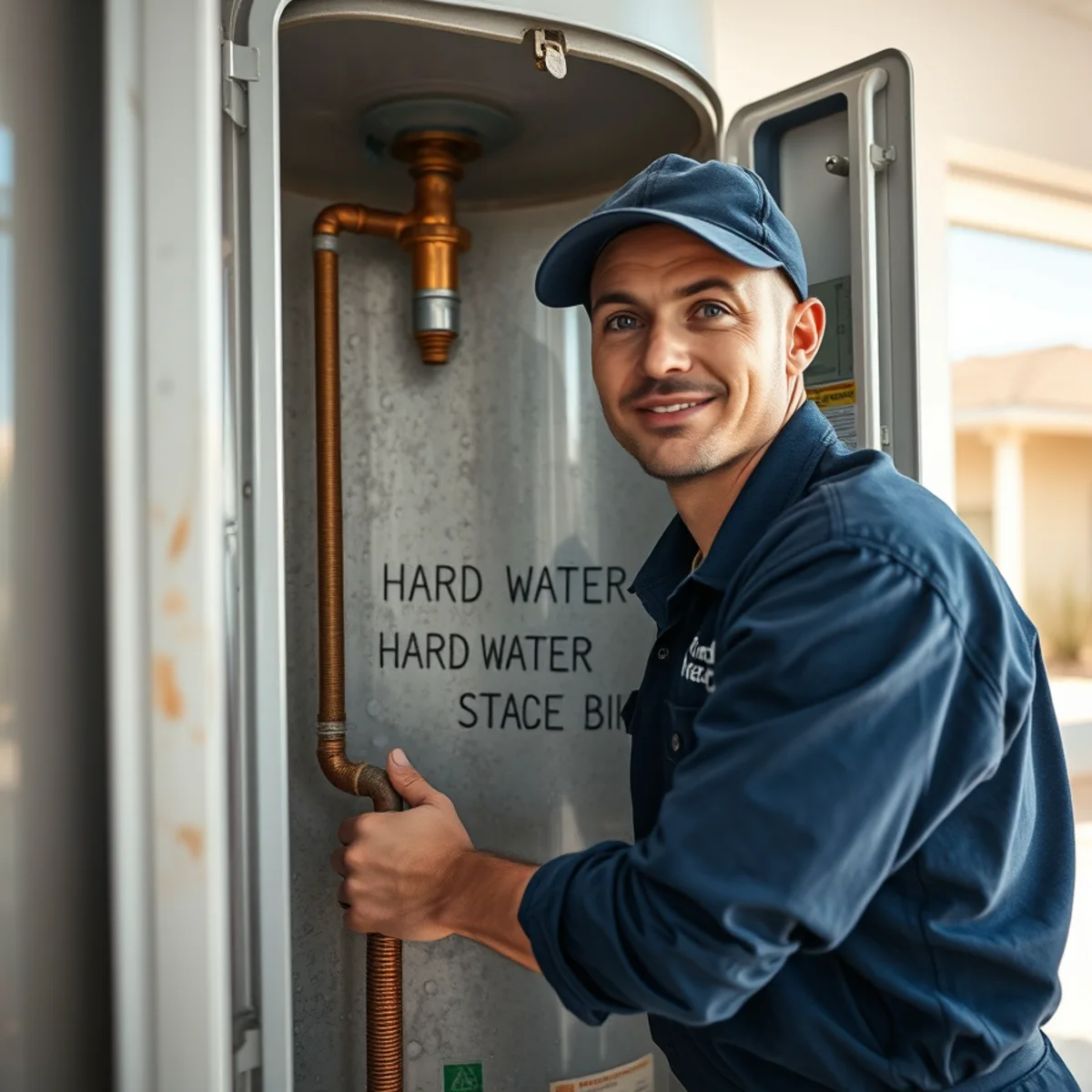
When hard water is heated, the dissolved calcium and magnesium drop out of solution and settle as a gritty layer on the bottom of the tank — the same chalky crust you scrape off a showerhead, only somewhere you can't reach.
On a gas heater, that layer sits between the burner and the water like a blanket. The burner runs longer to push heat through it, the steel above it overheats, and the tank ages fast. On an electric unit, scale coats the elements until they burn out. Either way you lose capacity — a scaled 50-gallon tank behaves like a 40 — and you lose years. This is the core reason Las Vegas water heaters fail early, often at 6 to 8 instead of 10 to 12.
- Popping or rumbling from the tank as it heats
- Hot water runs out faster than it used to
- Rusty or cloudy hot water, or grit at the tap
- The tank is under 10 years old but already struggling
Flush it every year — twice if you can
The single best defense is free. Draining the sediment out once a year keeps the layer from ever building up thick enough to matter. Kill the power or set the gas to pilot, shut the cold supply, hook a hose to the drain valve, and run it until the water clears.
Listen to the tank, too. A popping or rumbling sound while it heats is water boiling under a scale layer — your cue that it's overdue. If yours has never been flushed and it's more than a couple of years old, the valve may already be crusted; that's a good time to let us handle the first water heater flush and service so it drains fully without breaking the valve.
Set the temperature right
Heat drives scale. The hotter you run the tank, the faster minerals fall out of the water and cake on. Turning the thermostat down from a scalding 140°F to around 120°F slows scale formation, trims the energy bill, and still delivers plenty of hot water for a normal household.
120°F is also the safer setting for kids and older adults. It's a two-minute change on the dial that pays off for years.
Consider a softener or a tankless-with-descaling
If you want to stop scale at the source, treat the water before it ever reaches the tank. A water softener or conditioning system pulls the hardness out, which protects not just the heater but every fixture, valve, and appliance in the house. In water this hard, a softener often pays for itself in appliance lifespan alone.
Thinking about going tankless? They're a strong fit here, but only with discipline: a tankless heat exchanger scales shut fast on 16-grain water and needs a yearly descaling flush — non-negotiable. Pair a tankless unit with a softener and you've got the longest-lived setup available in this valley.
Know your neighborhood's water
Hardness isn't uniform across the valley, and a few areas run noticeably above the 16-grain average. Newer master-planned communities up in the northwest — Centennial Hills and the developments climbing toward the foothills — sit where homeowners often report especially aggressive scale on fixtures and shower glass.
It's worth knowing where you land. We break down the numbers in our explainer on how hard Las Vegas water really is — and the harder your pocket of the valley, the more a flush-plus-softener strategy earns its keep.
Talk to a Las Vegas plumber now
Open 24/7 for plumbing emergencies. Call for honest, up-front pricing.
Frequently asked questions
Will a water softener really make my heater last longer?
Yes — removing the hardness stops scale from forming inside the tank, which is what shortens its life here. In 16-grain water, a softener protects the heater plus every faucet, valve, and appliance downstream of it.
Is it too late if my tank already has heavy sediment?
Maybe not. An older tank that's never been flushed can sometimes be recovered with a careful drain. But if it's rumbling hard and past 8 years, budget for replacement — we'll give you a straight answer and an up-front price.
Tankless or tank for Las Vegas hard water?
Either works if you commit to maintenance. Tankless lasts longer and saves space but must be descaled yearly; a tank is cheaper up front and needs an annual flush. A softener helps both live longer.
The bottom line
Scale is patient, but so is a flush schedule. Drain the tank yearly, keep it around 120°F, and treat the water if you can — do that and you'll get every year your heater was built to give. Want us to handle the first flush or size a softener? Call (614) 830-0578.