A water heater is supposed to last 10 to 12 years. In Las Vegas, a lot of them do not make it to nine. We pull tanks at 6, 7, and 8 years all the time, and the reason is almost always the same thing: our water.
This is not a defect and it is not bad luck. It is chemistry. Once you understand what hard water does inside a tank, you can see the early warning signs coming and stretch the life of the unit you have.
Here is why valley water heaters die young, and what actually helps.
The real killer: hard-water sediment
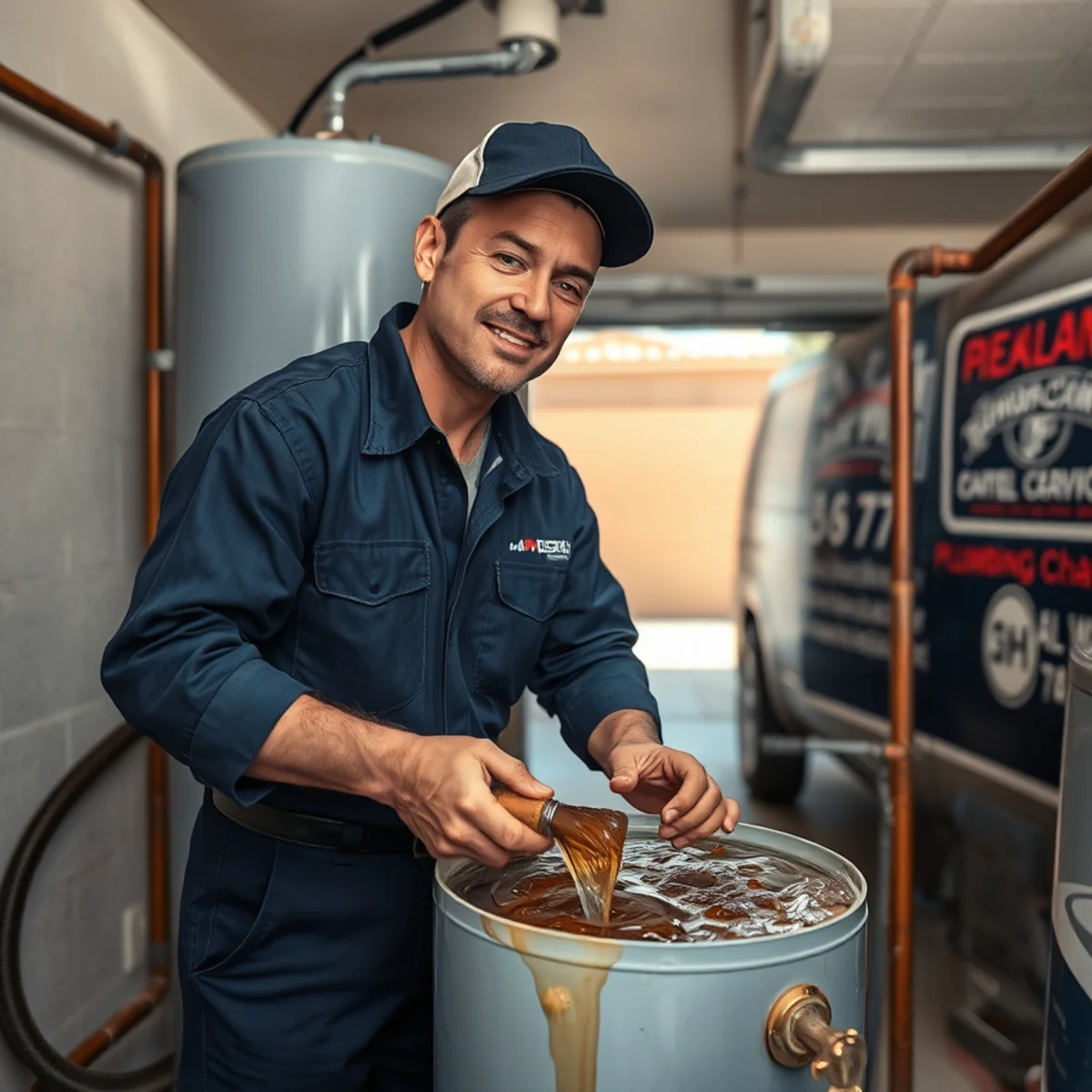
Las Vegas water carries roughly 16 grains of hardness per gallon — calcium and magnesium dissolved in every gallon that enters your tank. When that water is heated, the minerals drop out of solution and settle to the bottom as sediment.
Over months that sediment hardens into a thick crust sitting right over the burner or around the lower element. The tank now has to fire longer and hotter to push heat through that crust to the water. It runs harder, gets hotter at the steel, and wears out years before its time.
What the sediment actually does
That crust drives every common failure we see. It overheats the steel tank bottom on a gas unit, cooking the glass lining and letting the tank rust from the inside. On an electric unit it buries the lower element so it burns out.
It also eats your hot-water supply. Sediment takes up space that should hold hot water, so you run out faster than you used to. And it forces the burner to work overtime, which shows up on the gas bill before the tank finally quits.
- Popping or rumbling: water boiling under a sediment crust
- Less hot water than before: sediment is stealing tank volume
- Rusty or cloudy hot water: the tank lining is breaking down
- Water pooling at the base: the tank has rusted through — replace it
The anode rod runs out early too
Every tank has a sacrificial anode rod — a metal rod designed to corrode instead of the tank. Hard water and high mineral content chew through the anode faster here than in soft-water regions.
Once the anode is gone, corrosion moves to the steel tank itself, and from there failure is a matter of when, not if. A tank that gets a fresh anode partway through its life often outlasts one that never gets looked at.
How to beat the odds
You cannot change the water, but you can manage what it does. An annual water heater flush pulls the sediment out before it hardens into a crust — the single most effective thing you can do. Checking the anode rod every few years and replacing it when it is spent is the second.
The bigger fix is treating the water before it ever reaches the tank. A hard water treatment system or softener cuts the mineral load feeding the sediment, which protects the heater and every fixture in the house. Our guide on protecting your water heater from hard water goes deeper on the maintenance side.
When to repair and when to replace
Not every problem means a new tank. A bad thermocouple, a burned-out element, or a failed thermostat is a repair, and we do those same-day. Sediment noise on an otherwise sound tank calls for a flush, not a funeral.
But a tank leaking from the body has rusted through and cannot be fixed — that is a replacement, full stop. If yours is past eight years and starting to struggle, water heater repair or installation is the honest conversation, and we will tell you which way the math points. This is one of our most common calls across master-planned areas like Rhodes Ranch, where garages full of aging tanks all hit that 6-to-8-year wall around the same time.
Talk to a Las Vegas plumber now
Open 24/7 for plumbing emergencies. Call for honest, up-front pricing.
Frequently asked questions
How often should I flush my water heater in Las Vegas?
Once a year, minimum, given our 16-grain water. Some homes benefit from twice a year. Flushing before sediment hardens into a crust is what keeps a valley tank from failing early.
Is it worth repairing an 8-year-old water heater?
It depends on the failure. A thermocouple, element, or thermostat is a cheap, worthwhile repair. A leaking tank body is not repairable at any age. Past eight years, we help you weigh a repair against putting that money toward a new or tankless unit.
Will a water softener really make my heater last longer?
Yes. Cutting the mineral load means far less sediment settling and hardening in the tank, which is the main thing that kills valley water heaters early. It protects fixtures and faucets at the same time.
The bottom line
Las Vegas water heaters die young because hard-water sediment cooks them from the bottom up. Flush the tank yearly, watch the anode, and treat the water, and you can push a 6-year tank toward a full life. Hearing popping or running short on hot water? Call (614) 830-0578.