Las Vegas has some of the hardest tap water in the United States. That is not marketing — it is a measured fact, and it is quietly working on your pipes, your fixtures, and your water heater right now.
The Las Vegas Valley Water District puts the valley average around 16 grains per gallon. Some neighborhoods test higher — into the 20s and, in the hardest pockets, toward 30. For context, water is classified 'very hard' at anything over 10.5 grains per gallon, and the national average sits at just 5 to 7. So valley water runs two to three times harder than what most of the country deals with. Here is what that number actually means for your home.
What 'grains per gallon' actually measures
Hardness is a measure of dissolved minerals in your water — mainly calcium and magnesium. Grains per gallon (gpg) is how those minerals get counted. The more calcium and magnesium in the water, the higher the number, and the more scale that mineral load leaves behind as the water moves through your home.
At roughly 16 gpg valley-wide, Las Vegas is not borderline hard. It is very hard by any standard, and it has been that way for as long as the city has pulled its supply from the Colorado River. That mineral content is why your glasses spot, your showerhead crusts over, and a whole-home water softener is one of the most common upgrades we install.
Why the number changes by neighborhood (12 to 25+ gpg)
Not every address gets the exact same water. The valley blends treated Colorado River water drawn from Lake Mead with local groundwater, and groundwater tends to be harder. Depending on where you live and how your area's supply is mixed, your hardness can land anywhere from about 12 grains up into the mid-20s and beyond.
That is why a neighbor across town might report different numbers than you do. It is a Clark County-wide reality, not a single flat figure — but the whole valley sits well inside the 'very hard' range, so no part of town escapes the scale problem. The differences are a matter of how bad, not whether.
What hard water does to your plumbing
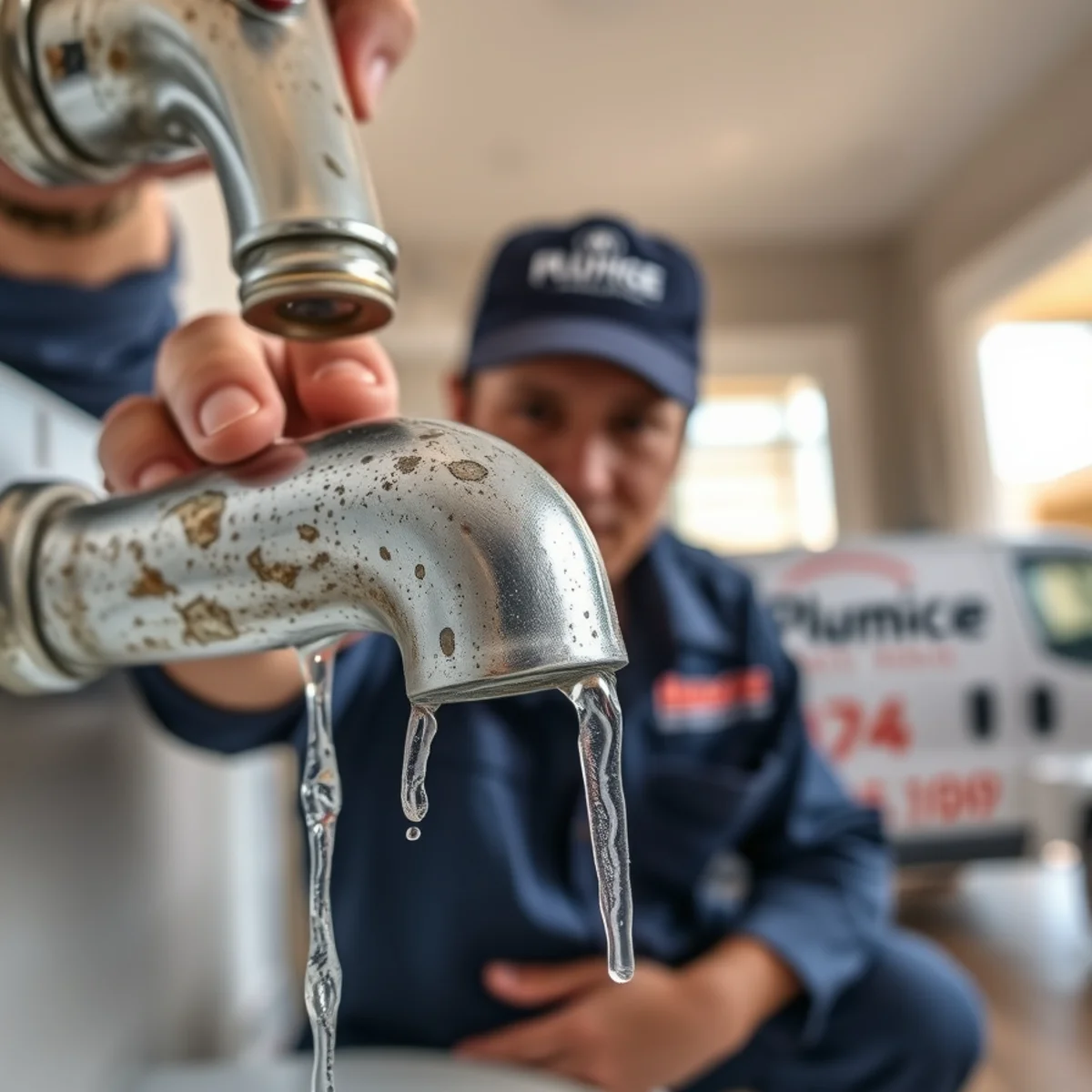
Scale buildup is the villain here. As hard water sits and heats, calcium and magnesium drop out of solution and cement themselves to metal and porcelain. Over the years that scale narrows the inside of your pipes, chokes aerators and cartridges, and drops your water pressure a little at a time — so slowly you may not notice until a fixture barely trickles.
You see the cosmetic side every day: spotted glassware, chalky white crust on faucets and showerheads, soap that will not lather, and stiff, dull laundry. Behind the walls it is doing the same thing to pipe walls and appliance valves — which is why we put together a guide on how to protect your water heater from hard water. None of it is dangerous to drink, but all of it costs you fixtures, flow, and appliances.
The hidden cost: your water heater
Your water heater takes the worst of it. Every gallon it heats drops more sediment to the bottom of the tank, where it bakes into a hard crust over the burner or the elements. That is the popping and rumbling you hear from an older tank — scale cooking against hot metal.
The result is brutal on lifespan. In our water, plenty of valley tanks fail at 6 to 8 years, when the same heater might run 10 to 12 elsewhere. An annual water heater flush clears the sediment and buys you years; a tankless unit with periodic descaling is another way to fight it. If you are weighing whether softening is worth it, our breakdown of water softener cost in Las Vegas lays out the math.
What actually helps
Three fixes carry most of the load. A whole-home softener is the big one — it pulls the calcium and magnesium out before the water ever reaches your pipes, so scale stops forming at the source. That protects fixtures, appliances, and the water heater all at once.
Short of that, flush your water heater once a year, and descale a tankless unit on schedule. Replace scale-clogged aerators and fixture cartridges rather than living with the low flow. Whatever route you choose, ask for a written, up-front price — hard-water work is routine here, and there is no reason to guess at the cost.
Talk to a Las Vegas plumber now
Open 24/7 for plumbing emergencies. Call for honest, up-front pricing.
Frequently asked questions
Is Las Vegas water safe to drink?
Yes. Hardness is dissolved minerals — calcium and magnesium — not contamination, and valley water meets federal drinking-water standards. Hard water is a nuisance for your plumbing and appliances, not a health hazard.
Will a water softener stop the white crust on my fixtures?
Yes. A softener removes the calcium and magnesium that form scale, so the chalky buildup on faucets, showerheads, and glassware stops at the source. Existing scale can be cleaned off once the water is softened.
How do I find out my home's exact hardness?
The Las Vegas Valley Water District publishes hardness by area, and we can test your water on site during any visit. Testing tells you whether you are near the valley average or in one of the harder pockets.
The bottom line
Sixteen grains per gallon is the number behind your spotted glasses, your crusty showerhead, and a water heater that gave out early. It is very hard water, it is not going to change, and the fixes are well understood. If you want your home's hardness tested or a softener priced up front, call Mike's Drain and Plumbing at (614) 830-0578.