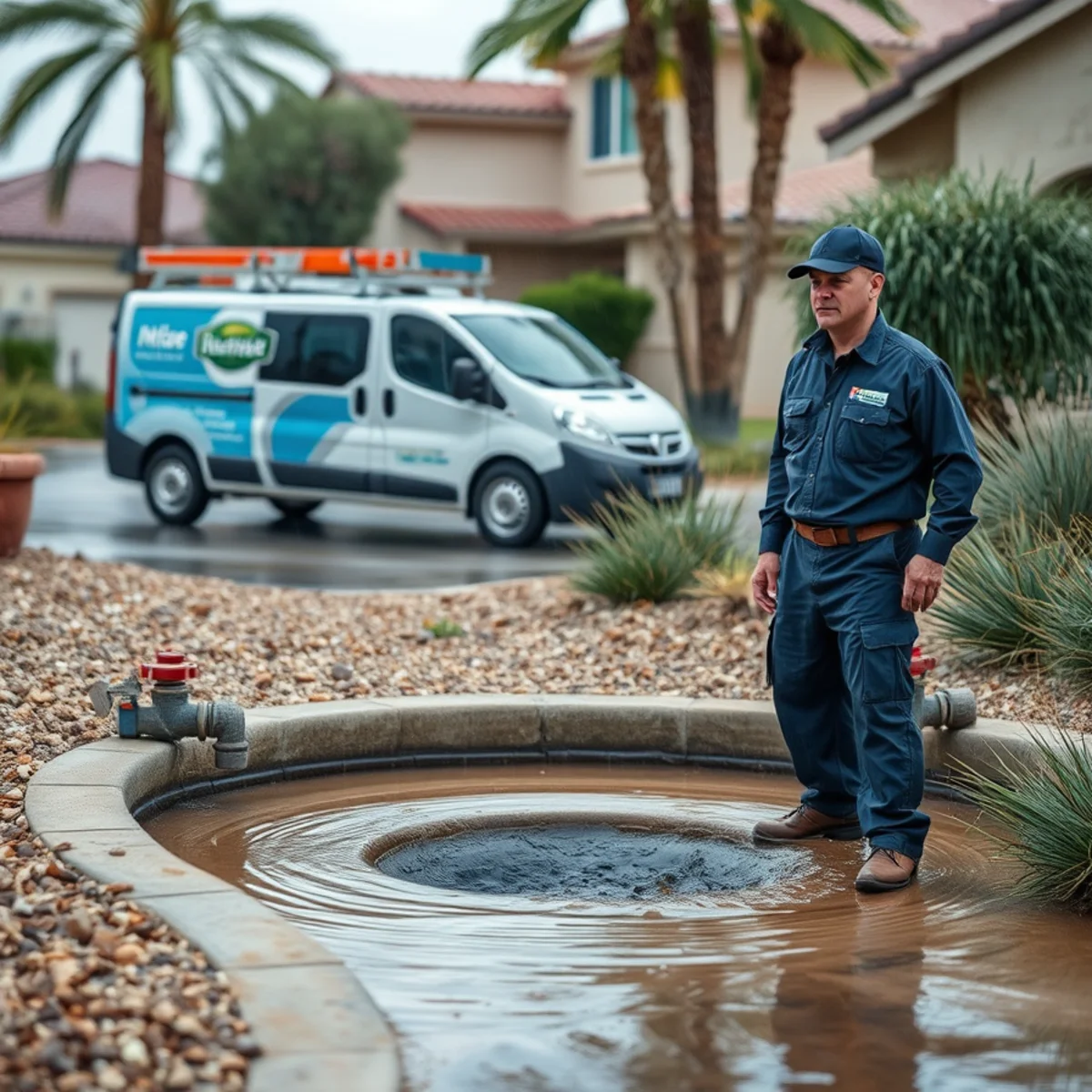
A monsoon cell can dump an inch of rain on the valley in an hour, and the desert has nowhere to put it. Most of that water runs off — but some finds its way into your sewer line through cracks and old joints, and when the line can't keep up, it comes back the way it came: up through your lowest drain.
Sewage backing into a tub or a floor drain is the worst call we take all storm season, and it's largely preventable. Our monsoon runs roughly July through September. Here are five things to do before it does.
1. Camera-inspect an older sewer line before the storms
Groundwater doesn't get into a sound pipe. It gets in through cracked joints, offset sections, and gaps where tree roots have pried the line open — and a heavy monsoon surge exploits every one of them. If your home has some age on it, you want to know the condition of that line before the sky opens up.
A camera inspection is the only way to see inside. It tells you whether you've got roots, a crack, or a bellied section holding water. This matters most in the established parts of the valley — neighborhoods like Sunrise Manor, where a lot of homes still run original clay or cast-iron sewer lines with decades of root intrusion working on the joints.
2. Clear roots and grease with a jetting, not a quick snake
A cable machine punches a hole through a blockage; it doesn't clean the pipe. Roots grow right back through the gap, and the greasy, scaled walls that narrowed the line are still there to catch the next surge.
Hydro jetting scours the pipe wall to wall with high-pressure water, cutting roots back to the pipe and stripping out grease and scale. Going into monsoon season with a fully cleaned line gives storm flow room to move instead of choking a half-blocked pipe. If you're weighing your options, our comparison of hydro jetting versus snaking lays out when each one makes sense.
3. Keep the yard and area drains flowing
Standing water around the house is what infiltrates the sewer line and pools against the foundation. Before the season, clear every yard drain, area drain, and patio drain of the dirt, gravel, and dead landscaping that clog them over a dry spring.
Look at your grading, too. If the yard slopes toward the house, or the low point sits against a wall, storm water collects exactly where you don't want it. Getting water to run away from the house keeps it out of both your foundation and your sewer line.
- Clear yard, patio, and area drains of debris and gravel
- Make sure grading carries water away from the foundation
- Keep roof downspouts discharging well clear of the house
- Don't let a dry-season dust layer cake over the drain grates
4. Ask about a backwater valve
If your home has ever backed up during a storm — or sits low relative to the street and the neighbors — a backwater valve is worth a conversation. It's a one-way gate installed in the sewer line that lets waste flow out but slams shut if the municipal line surges and tries to push sewage back toward your house.
It's the single most effective physical defense against a storm backup for a vulnerable home. Not every house needs one, but for repeat victims it's a permanent fix rather than a wet-shop-vac ritual every July.
5. Stop feeding the line what clogs it
Year-round habits decide how much reserve capacity your line has when the storm hits. Grease poured down the kitchen sink hardens on the pipe wall and narrows it. 'Flushable' wipes aren't — they snag on roots and scale and build a dam. Both turn a line that could have handled a surge into one that can't.
Keep grease in a can and wipes in the trash, and your line goes into monsoon season with room to spare. If the worst happens anyway, know the drill — our guide on the first five steps in a sewer backup walks through it, and we run 24/7 sewer backup service when you need the line cleared now.
Talk to a Las Vegas plumber now
Open 24/7 for plumbing emergencies. Call for honest, up-front pricing.
Frequently asked questions
Why do sewer backups spike during monsoon season?
Storm runoff seeps into the ground and infiltrates sewer lines through cracked joints and root gaps. That flood of groundwater can overwhelm the line and push wastewater back up into low drains — tubs, showers, and floor drains.
Will a backwater valve stop a monsoon backup?
For most homes, yes — it's a one-way gate that closes when the main line surges, blocking sewage from flowing back into the house. It's the strongest defense for a home that has backed up before or sits low.
How do I know if my sewer line is at risk before a storm?
A camera inspection shows the inside of the line — roots, cracks, or bellies that let groundwater in. Older homes with mature trees and clay or cast-iron pipe are the highest risk and worth inspecting before July.
The bottom line
Inspect the line, jet out the roots and grease, keep your drains and grading working, and consider a backwater valve if you've been hit before. A little prep in June beats a flooded bathroom in August. Want your line checked before the storms? Call (614) 830-0578.
Related pages