
Most Las Vegas homeowners never think about their plumbing until it stops cooperating — a water heater that quits, a faucet that drips all night, a drain that finally gives up mid-dinner-party. By then the cheap fix is off the table.
An hour of maintenance once a year changes that. Our water runs roughly 16 grains of hardness per gallon valley-wide — the Las Vegas Valley Water District calls anything over 10.5 'very hard,' and we sit well past it. That mineral load is quietly working on your pipes, fixtures, and water heater every single day. Here's the annual checklist we'd run on our own homes.
Flush the water heater — the one job that matters most
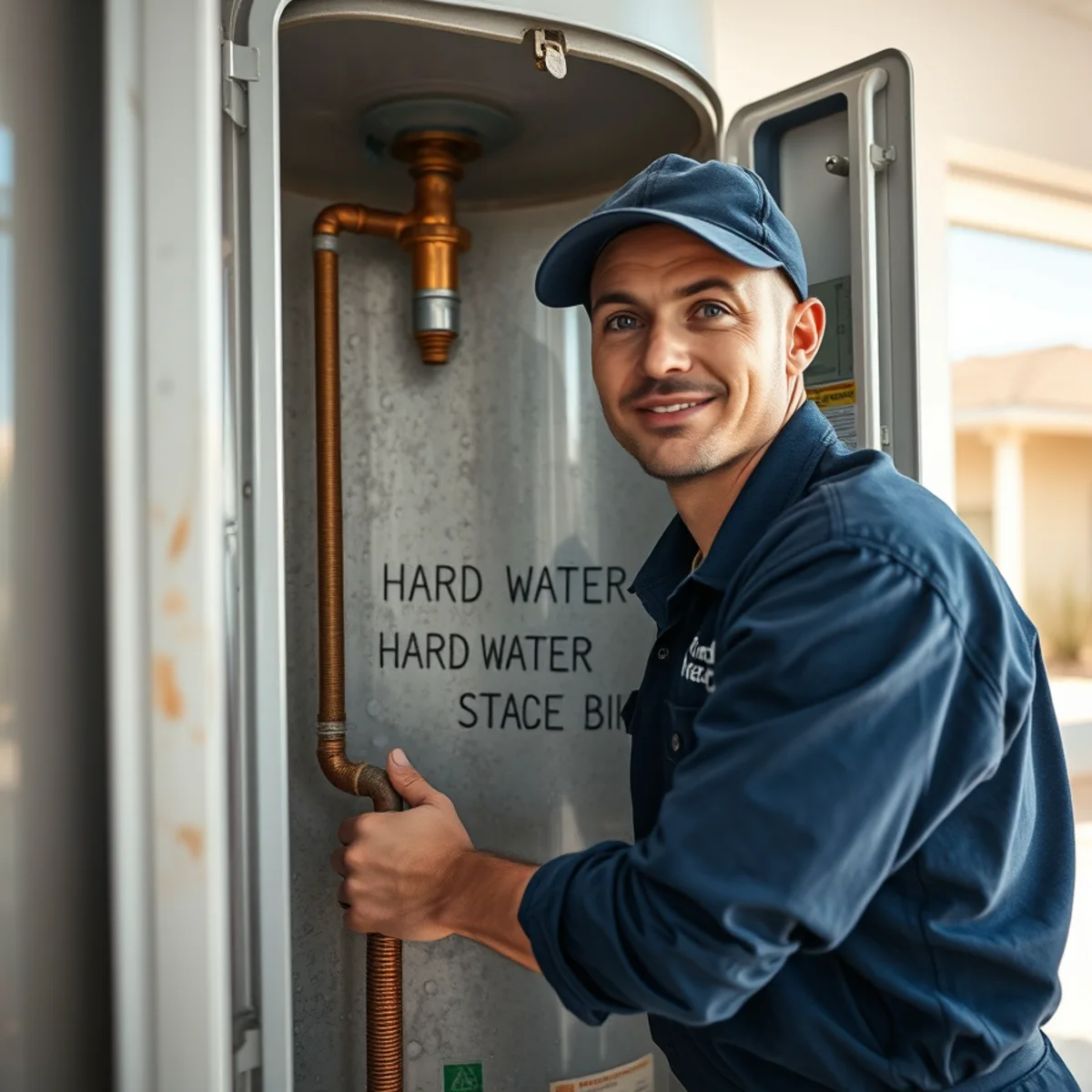
If you do nothing else on this list, do this. Sediment — the chalky scale our hard water leaves behind — settles to the bottom of the tank, bakes onto the burner or heating element, and steals both efficiency and years of life. Valley tanks routinely fail at 6 to 8 years when a softer-water tank would run 10 to 12.
Once a year, drain a few gallons through the bottom valve until the water runs clear, or do a full flush if you've never done one. If it comes out looking like a snow globe, you've been overdue. A sediment-packed tank sometimes won't drain at all — that's when it's worth having us handle the water heater flush and service before the valve clogs solid. Tankless owners aren't off the hook either: those units need a yearly descaling, which we cover in our guide to protecting a water heater from hard water.
Test every shutoff valve before you need it
Valves seize when they sit untouched for years — and the day you discover that is usually the day water is spreading across the floor. Once a year, exercise them: the main shutoff (near the front hose bib, in the garage wall, or at the meter box), the angle stops under sinks and behind toilets, and the valve feeding the water heater.
Turn each one off and back on. If a valve is stiff, weeps, or won't fully close, don't force an old gate valve into snapping. Note it and have it swapped for a modern quarter-turn ball valve — a small job that makes the next emergency survivable.
- Main water shutoff — off, then on; confirm the flow actually stops
- Under-sink angle stops at every sink and toilet
- The supply valve feeding the water heater
- Outdoor hose bibs and the irrigation shutoff
Hunt for slow leaks under sinks and around fixtures
Grab a flashlight and a dry paper towel. Wipe the supply lines and P-traps under each sink; a towel that comes back damp, or a green-white crust on a fitting, means a slow leak that's only going to grow. Check the base of each toilet for rocking or a soft floor, and look at the caulk line around tubs and showers.
A fixture leak caught now runs roughly $150 to $500 to fix. The same leak ignored until it rots a cabinet base or feeds mold behind the wall is a very different bill. This is bread-and-butter residential plumbing work, and it is far cheaper as prevention than as damage control.
Read your water pressure
High pressure feels great in the shower and destroys plumbing from the inside. Anything over about 80 psi hammers on valves, washing-machine hoses, and the water heater. A ten-dollar gauge that screws onto a hose bib tells you where you stand in seconds.
If you're running hot, you likely have a pressure regulator — usually where the main line enters the house — that's aging out; they typically last 8 to 12 years. Falling pressure is the opposite warning: scale narrowing the pipes, or a hidden leak bleeding it off. Either direction is worth a look before it becomes a burst hose at 2 a.m.
Walk the drains and the whole house
Run every drain and watch how it clears. A sink that gurgles or drains slow is telling you scale and gunk are narrowing the line — much easier to clear now than after it stops entirely. Pour a little water into rarely used floor drains and guest-bath traps so the seals don't dry out and let sewer gas in.
Then do a slow lap of the house: washing-machine hoses (replace rubber ones with braided steel), the water heater's surroundings, exposed pipe in the garage, and any ceiling stain that wasn't there last year. If you'd rather have trained eyes on it, a professional home plumbing inspection covers all of this in one visit. We run them across Las Vegas, from the older ranch homes east of the Strip to the newer builds out toward the 215 Beltway.
Put it on the calendar
The trick to actually doing this is tying it to a date you won't forget. Pick a season, attach it to something you already do — spring cleaning, the clock change — and it becomes a habit instead of a someday.
- Spring: flush the water heater, test pressure, check hose bibs before summer demand
- Early summer: clear yard and area drains before monsoon season arrives
- Fall: exercise the shutoff valves and insulate exposed pipe before the first cold snap
- Anytime: fix a drip the week you notice it, not the year after
Talk to a Las Vegas plumber now
Open 24/7 for plumbing emergencies. Call for honest, up-front pricing.
Frequently asked questions
How often should I flush my water heater in Las Vegas?
At least once a year here — our hard water builds sediment about twice as fast as the national average. If yours is a few years old and has never been flushed, do it now, or let us handle the first one so the drain valve doesn't clog solid.
Can I do an annual plumbing check myself?
Most of it, yes — valves, leaks, pressure, and drains need only a flashlight and a cheap gauge. Call a pro when a valve won't close, pressure reads high or low, or a drain won't clear no matter what you try.
What's the one thing homeowners skip that costs them the most?
The water heater flush. Skipping it is the single biggest reason valley tanks die years early — and they often take a stretch of garage floor with them when they finally let go.
The bottom line
An hour a year — a flush, a few valves, a flashlight under the sinks — is the cheapest insurance in the house. Knock it out this weekend, and if anything on the list looks off, we'll take it from there. Call (614) 830-0578.