A sewer backup is stressful enough without the second worry that follows close behind: is this my bill, or the city's? The answer decides who you call and who pays for the repair and the cleanup — and it isn't always obvious.
Here's how responsibility is split in the Las Vegas valley, how to find out which side of the line your blockage is on, and what to do in either case.
The basic rule: you own the lateral
In almost every jurisdiction, including here, the property owner is responsible for the sewer lateral — the pipe that carries waste from your house out to the public main. The city or county owns and maintains the main in the street.
So if the blockage, roots, or broken section is anywhere in the lateral — under your yard, your driveway, or out to the connection point — it's yours to fix. If the problem is in the public main, it's the municipality's. The tricky part is that the lateral is the longer, older, more failure-prone pipe, so most backups land on the homeowner.
Where the line is drawn in Clark County and the valley
Sewer service in the valley is handled by a mix of agencies — the Clark County Water Reclamation District covers unincorporated areas (including the Enterprise/Silverado Ranch zone around our shop), while the cities of Las Vegas, Henderson, and North Las Vegas run their own systems. The exact point where your responsibility ends — the property line, the curb, or the main itself — varies by agency.
Because that handoff point differs, it's worth confirming with your specific sewer authority. But the practical rule holds valley-wide: the lateral is yours, the main is theirs, and a camera inspection is how you prove which one failed.
How to find out whose side the blockage is on
This is the part you don't want to guess at, because it decides who pays. The answer comes from a camera.
- Count the fixtures. One area backing up points to your lateral; every low drain in the house backing up at once can mean the public main.
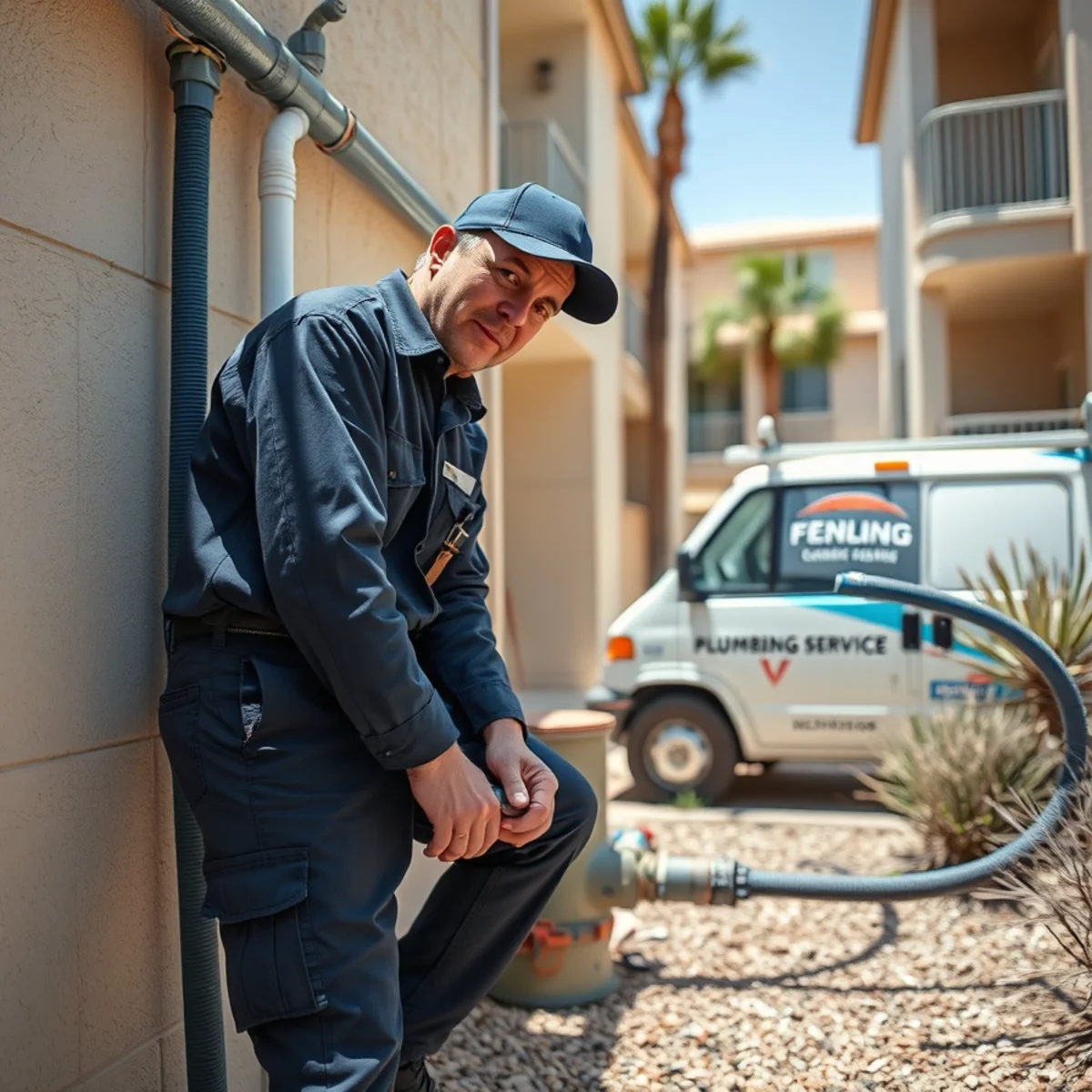
- Find your cleanout. The capped pipe near the house or property line is the access point we camera from.
- Run the camera to the connection. It shows the blockage and how far down it sits — on your side or past the property line.
- Get it documented. Footage and a written location report are what both the city and your insurer will want.
If it turns out to be the city's main
If the blockage is in the public main, contact your sewer authority right away — many run their own emergency crews, and they're responsible for clearing it. Document everything (photos, dates, the camera report), because if a public-main backup damaged your home, that documentation is the basis of any claim against the municipality.
We can provide the camera footage and a clear written location that shows the problem was past your connection point, which makes that conversation far easier.
If it's your lateral
If the blockage is on your side, it's a plumbing job — and the faster it's cleared, the less damage ends up indoors. We handle emergency sewer backup service 24/7: clear the line, camera the cause, and give you honest options, whether that's a one-time clearing, hydro jetting, or a sewer line repair for a cracked or root-invaded section.
Whether or not you can recover the cost depends on your coverage — see does insurance cover sewer backup.
Condos, townhomes, and shared laterals
Multi-unit properties add a third party: the HOA. In many condos and townhomes the building or association owns the shared stacks and the lateral, while you own only the pipe inside your unit — but the CC&Rs decide, and they vary. We break down how to sort it in who owns shared plumbing lines in an HOA.
Talk to a Las Vegas plumber now
Open 24/7 for plumbing emergencies. Call for honest, up-front pricing.
Frequently asked questions
Is the sewer line from my house to the street my responsibility?
Generally yes. Property owners own the sewer lateral from the building to the public main; the city or county owns the main. The exact end point varies by sewer authority in the valley, so confirm with yours — but the lateral is almost always the homeowner's.
Who do I call for a sewer backup in Las Vegas?
If it's your lateral, call a plumber — we run 24/7 sewer backup service. If a camera shows the blockage is in the public main, call your sewer authority (the city of Las Vegas, Henderson, North Las Vegas, or the Clark County Water Reclamation District, depending on where you are).
Does the city pay for sewer backup damage?
Only if the failure was in the public main and the agency was negligent — and you'll need documentation (camera footage, dates, a location report) to make that case. Backups in your own lateral are the homeowner's responsibility.
The bottom line
The rule is simple even when the situation isn't: you own the lateral, the city owns the main, and a camera proves which failed. We'll find out fast, fix it if it's yours, and document it either way. Call (614) 830-0578 any hour.