In a restaurant, a plumbing failure isn't an inconvenience — it's a closed sign. A backed-up kitchen line during Friday dinner service means comped tables, a health-code problem, and staff standing around while the money walks out the door.
Commercial kitchens abuse their plumbing in ways a house never will: gallons of grease, a dishwasher running all day, a mop sink, and food solids down every drain. Left to chance, that line will clog at the worst possible moment. A scheduled maintenance plan is how the busy kitchens along Spring Mountain Road stay open. Here's what one should cover.
Why restaurant lines clog on their own schedule
The enemy is grease. No matter how careful the kitchen is, fats, oils, and grease go down the drains in solution, then cool and harden on the pipe walls downstream. Layer by layer the line narrows until a busy night pushes more through than the opening can pass — and it backs up onto the kitchen floor.
Our hard water makes it worse: scale gives the grease something to grip, so lines here fur up faster than in softer-water cities. A commercial kitchen's drain lines aren't a question of if they'll clog, but when — which is exactly why you schedule around it instead of waiting for it.
Hydro jetting on a set interval
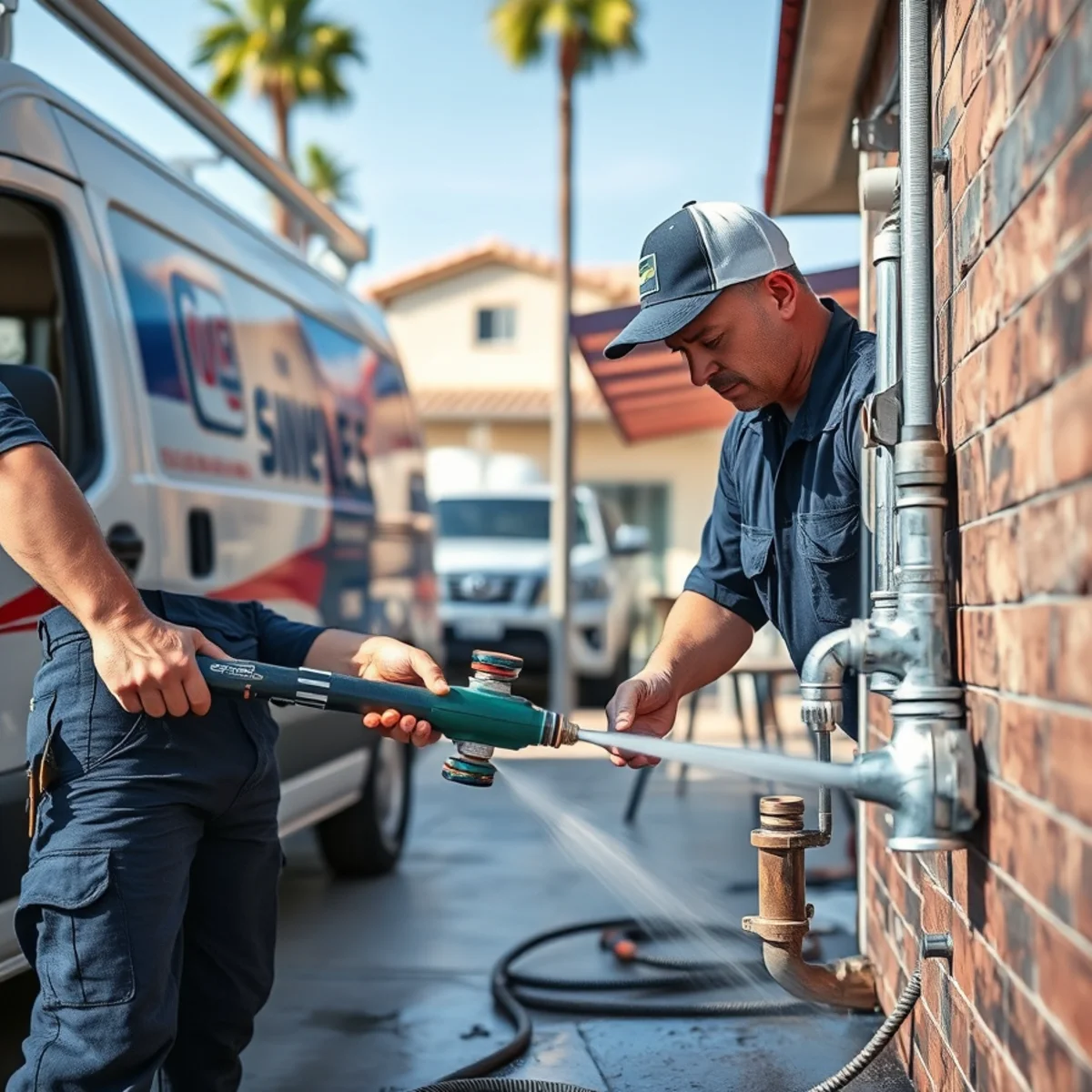
The core of any restaurant plan is periodic hydro jetting of the kitchen waste lines. High-pressure water scours the pipe back to bare wall, cutting through hardened grease that a cable just bores a hole in. A snake buys you a week; a proper jetting resets the line.
How often depends on volume. A high-output kitchen might need the main grease line jetted every one to three months; a lighter operation, twice a year. We set the interval to your actual usage so you're not overpaying or under-protected. If you're weighing methods, our breakdown of hydro jetting versus snaking explains why jetting wins on grease.
- Kitchen waste and grease lines — jetted on a volume-based interval
- Grease trap or interceptor — pumped and inspected on schedule
- Floor drains and mop sink — kept clear and draining
- Prep sinks, dish pit, and disposals — checked for slow drainage
Don't forget the grease trap
Every commercial kitchen needs a working grease trap or interceptor, and the health department will check it. Under-sink traps fill fast and need frequent pumping; larger in-ground interceptors run longer between services. Either way, an overflowing trap sends grease straight into your line — and into the sewer, where it becomes a code violation.
A maintenance plan tracks the trap's service schedule so it never gets missed in the chaos of running a kitchen. Staying ahead of it keeps you clear with inspectors and keeps the grease out of the pipe you just paid to have cleaned.
Watch the fixtures that quietly cost you
Beyond the drains, a restaurant runs its fixtures hard. A running toilet or a dripping pre-rinse faucet wastes water around the clock on a commercial meter — that's real money on a valley water bill. Failing water heaters, faulty backflow preventers, and leaking dish-machine connections all show up on a routine check before they become a shutdown.
A quarterly walk-through catches the small stuff: worn faucet cartridges, a water heater starting to rumble with scale, a wax ring going soft under a toilet. Fixing a $200 problem on a scheduled visit beats an after-hours emergency call in the middle of service.
A plan built for your location
Not every kitchen is the same, and neither is every building. The dense restaurant corridors — Chinatown along Spring Mountain Road, food halls, and the strip-mall plazas scattered across the valley — often put several tenants on shared waste lines, where one kitchen's grease becomes everyone's backup. Knowing how your building is plumbed changes the plan.
Shared-line buildings raise the same who-pays questions that come up in condos and HOAs; our guide on responsibility for shared plumbing lines is worth a read if you lease in a multi-tenant plaza. We tailor each maintenance agreement to the building, the menu, and the volume — not a one-size template.
Talk to a Las Vegas plumber now
Open 24/7 for plumbing emergencies. Call for honest, up-front pricing.
Frequently asked questions
How often should a restaurant's grease line be hydro jetted?
It depends on volume. High-output kitchens often need the main grease line jetted every one to three months; lighter operations, roughly twice a year. We set the interval after seeing how fast your lines actually load up.
Isn't snaking the kitchen line cheaper than jetting?
Cheaper per visit, more expensive over a year. A cable bores a hole through grease and the line reclogs quickly; jetting scours it clean so you go far longer between backups. For grease, jetting is the better value.
Can you service our kitchen without shutting down?
Usually, yes — we schedule jetting and maintenance around your hours, often before open or after close, so it doesn't touch service. That's the whole point of a plan: no surprise closures during a rush.
The bottom line
A clogged line during dinner service is the most expensive plumbing problem a restaurant can have — and the most preventable. Scheduled jetting, a tracked grease trap, and a routine fixture check keep the kitchen open and the inspector happy. Let's build a plan around your kitchen. Call (614) 830-0578.